Not just survive. Not just limp along. These actually THRIVE– despite the extremes.
There’s a big difference between a plant that tolerates heat… and one that still looks like you knew what you were doing when it’s 108° in August and the wind feels like a hair dryer. In North Texas, that difference matters.
Every summer, we see often the same thing: landscapes installed in spring that look great in April… and exhausted by July. And by August, it’s a mix of crispy edges, stalled blooms, and irrigation systems working overtime just to keep things alive. Especially if you’re planting from the selection at the box stores.
Each of the species below are Texas native plants that are built for extreme heat, poor soils, and long dry stretches. They don’t need constant intervention, and more importantly—they still perform when it’s brutally hot!
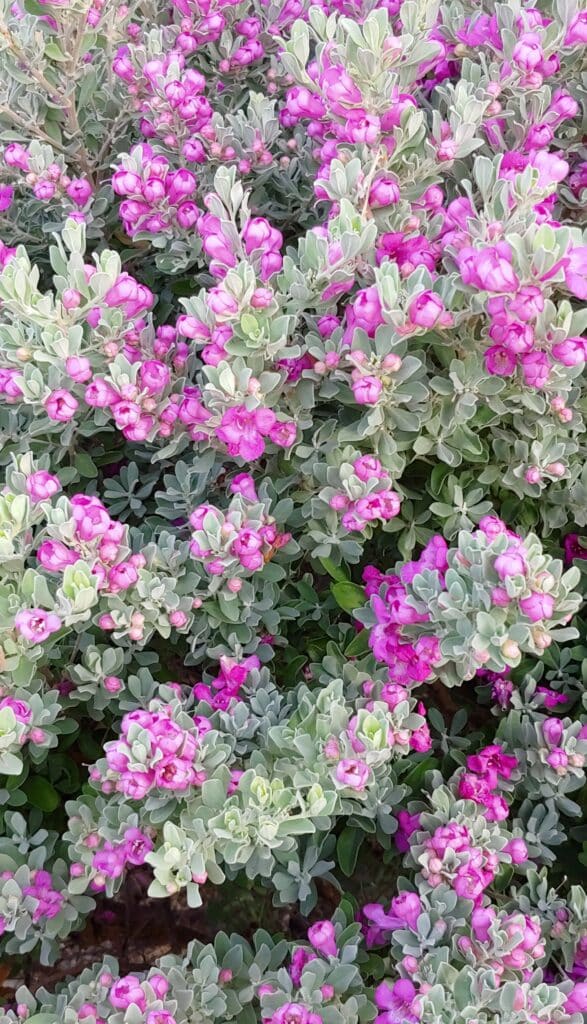
If North Texas had an official “heat champion,” this would be it.
Silver foliage reflects sunlight, it thrives in lean soils, and once established, it needs very little supplemental water. The blooms—triggered by humidity—usually show up like clockwork after summer rains.
If this plant is struggling, it’s not the plant. 😉 It’s either because you are giving it too much water or not enough sunlight!
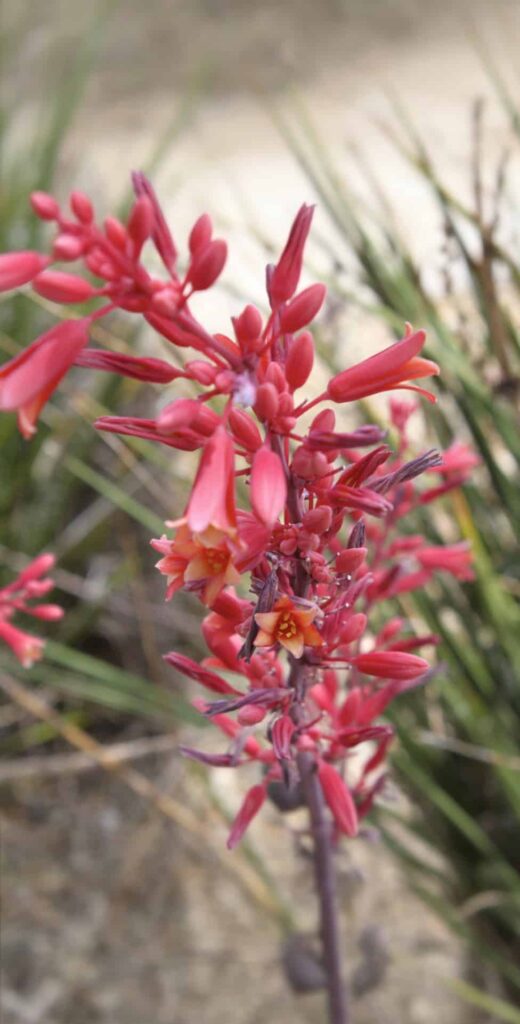
This is structure, durability, and evergreen reliability all in one.
Red yucca holds its form year-round and sends up tall flower spikes that hummingbirds can’t resist—even in the worst heat. It doesn’t collapse, it doesn’t melt, and it doesn’t ask for much. They also come in a wide variety of pinks, white and yellow
In a landscape, this is your backbone plant.
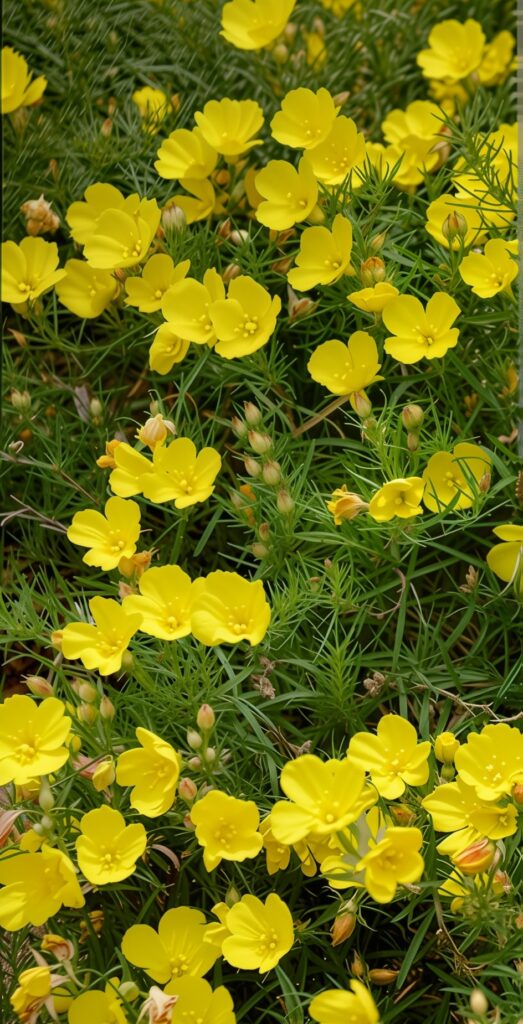
Bright yellow blooms. Low, spreading habit. Zero drama.
Calylophus thrives in the exact spots most plants struggle—along sidewalks, driveways, and other heat-reflective areas. It keeps flowering through the worst of summer without needing pampering.
This is one of the most underrated performers in Texas landscapes.
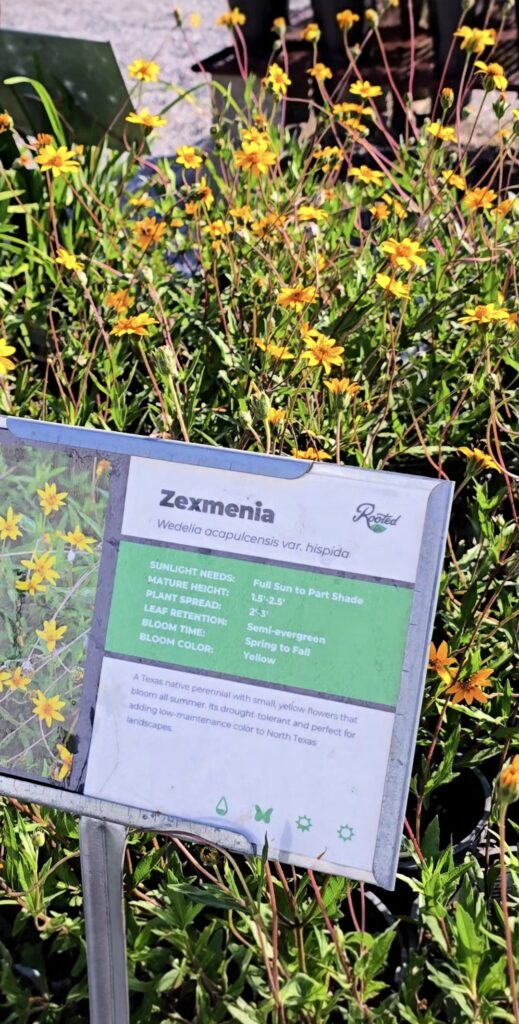
If you want consistent summer color without constant watering, this is it.
Zexmenia produces warm golden blooms for months and months and handles heat better than most traditional “color” plants. Pollinators love it, and it doesn’t fade when temperatures spike. In fact, it’s one of the favorite plants we sell.
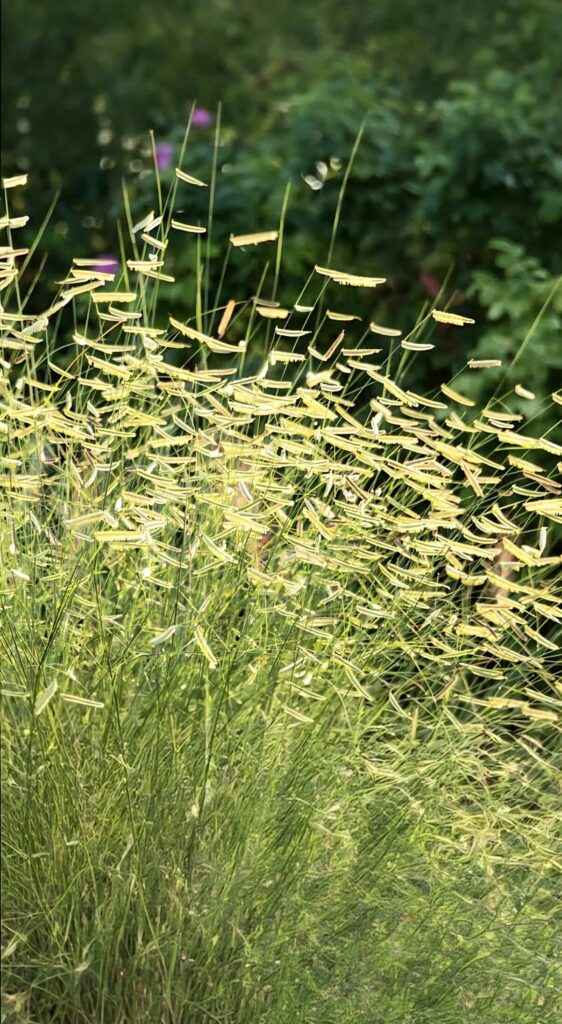
This is where native grasses start to shine.
The ‘Blonde Ambition’ version of this endemic Texas plant stands out for its unique horizontal seedheads—often described as “eyelashes”—that float above the foliage. Even in extreme heat, it maintains structure and visual interest.
It brings movement and texture to a planting without looking stressed or overgrown.
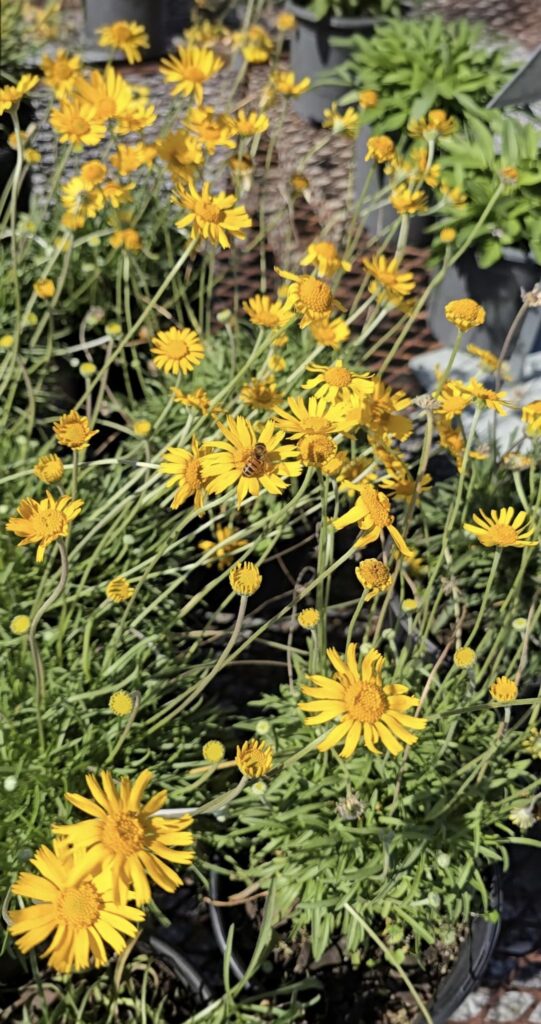
Compact, clean, and incredibly tough.
This native daisy thrives in poor soils and the most intense heat and sunlight, producing bright yellow flowers while maintaining a tidy form. And incredibly in most winters, it’s semi-evergreen, and can bloom nearly year-round!
And for borders, it’s a great alternative to high-maintenance seasonal color.
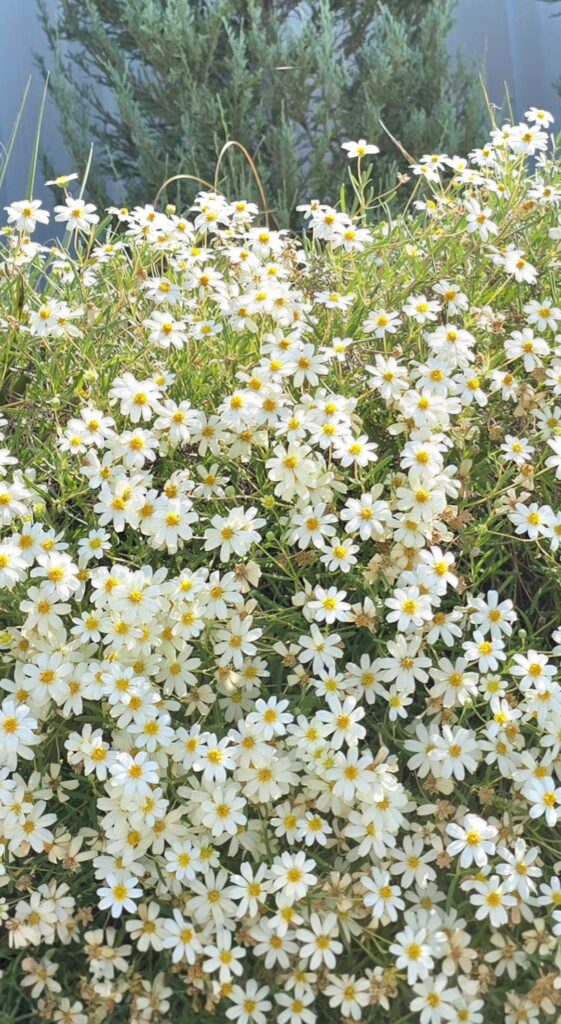
Simple, reliable, and long-blooming.
Blackfoot daisy produces sweet-smelling crisp white flowers throughout the growing season and performs at its peak in extreme heat—especially in well-drained soils. It’s a great choice for borders, pathways, and repeated patterns in a design. Its also the perfect “spiller” for a pot!
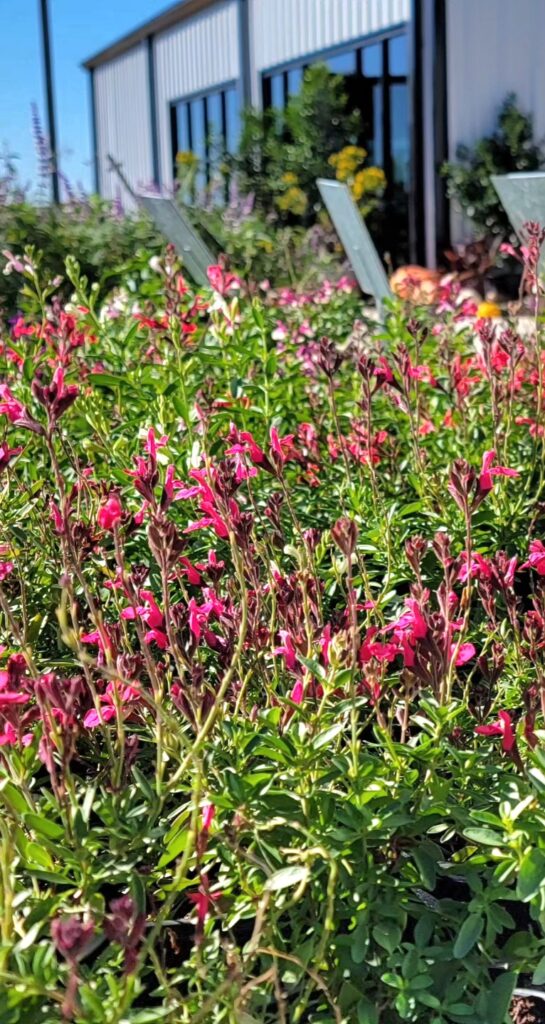
One of the longest-blooming natives we grow.
Autumn sage flowers from spring through fall and supports hummingbirds, bees, and butterflies along the way. There are so many different color options, including bi-color blooms and compact forms. During the peak of summer, it may slow down just a tad—but it holds on and rebounds quickly when conditions ease.
Few plants offer this much return over such a long season.
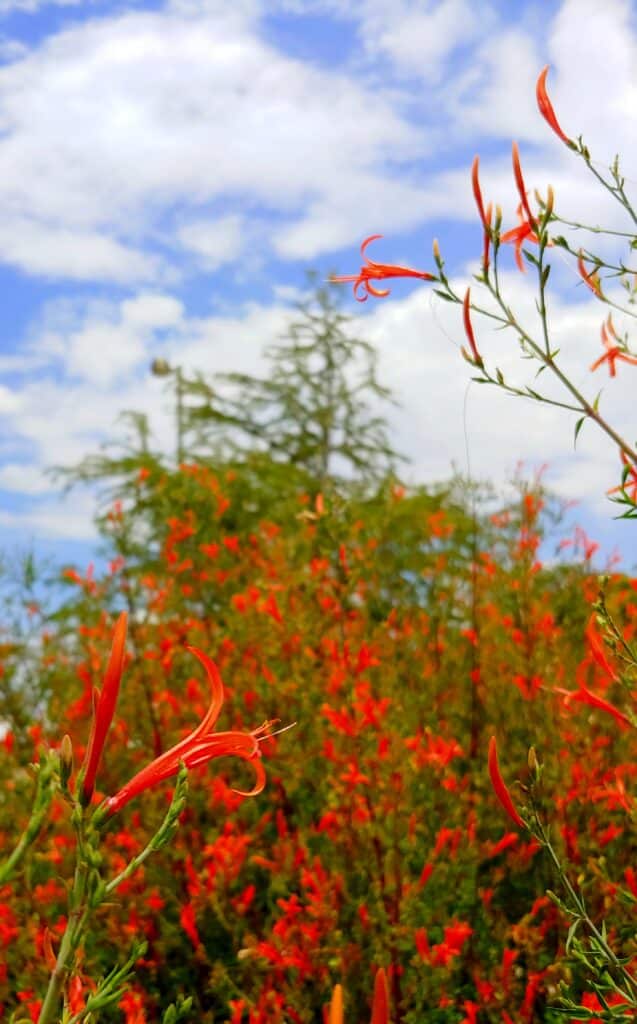
A late-season standout.
Flame acanthus waits for the heat—and then delivers. Bright orange-red firecracker-like blooms explode in mid-to-late summer when many other plants are fading. It handles poor soils and drought with ease.
If you want color in August, this is one of your best bets.
These aren’t just “heat tolerant” plants.
They are each:
Adapted to North Texas soils
Able to handle extended drought and the most extreme heat
Capable of maintaining structure, color, or bloom when temperatures peak
And maybe most importantly—they don’t require you to constantly intervene just to keep them alive! Once established, they require almost zero care, in fact, too much “love” is the fastest way to kill them.
All of these plants will grow in North Texas clay when it’s properly prepared. Amend soil lightly with compost and expanded shale or another coarse aggregate to improve structure and drainage—drainage matters more than fertility. Plant each in full sun (6–8+ hours) for best performance, and take advantage of slope or even a slight micro hill to help shed excess water.
These plants also excel when added to soften the texture in rock, gravel, and cactus-style plantings– where soils are lean and fast-draining. Water to establish, then back off—once rooted, most require very little supplemental irrigation and minimal ongoing maintenance.
At 108°, most landscapes are in survival mode.
The goal isn’t just to keep plants alive—it’s to build a landscape that still looks intentional, functional, and alive in the toughest part of the year! These nine plants do that, and then some.


Pick-up Locations (selected when checking out):
Arlington – 1100 SW Green Oaks Blvd., Arlington, TX 76017
Bedford – 2424 Forest Ridge Dr., Bedford, TX 76021
College Station – 13600 Rock Prairie Road, College Station, TX 77845
Fort Worth – 800 E Northside Drive, Fort Worth, TX 76102
Mansfield – 620 S Wisteria St, Mansfield, TX 76063
Pilot Point – 12804 Pelzel Rd, Pilot Point, TX 76258
Southlake – 1950 E. Continental Blvd., Southlake TX 76092

Fall Garden Pickup Date:
Saturday, September 26
9 AM – 11 AM
Instructions:
Stay in your vehicle—we’ll load your garden box for you.
Plants MUST be picked up at the pre-chosen date, time and location.
No rainchecks. No refunds. Unclaimed plants will be donated to a local community garden.
ADDRESS:
12804 Pelzel Rd Pilot Point TX 76258
*Located off FM 455, about halfway between Celina and Pilot Point
CALL: 972.954.8580
TEXT: 972.954.8574
HOURS:
Tuesday – Saturday 9 AM – 5 PM
Sunday 10 AM – 5 PM