(Tree List Texas is home to more than 900 species of native bees, with hundreds found right here in North Texas. Native bees are simply bees that evolved here—species adapted to our soils, climate, and native plants. That includes everything from tiny sweat bees (Lasioglossum, Halictus) and mining bees (Andrena), to leafcutter bees (Megachile), mason bees (Osmia), carpenter bees (Xylocopa), and bumble bees (Bombus).
That’s an incredible level of diversity—but it’s also something we’re steadily chipping away at through habitat loss, pesticides, and development. In today’s landscapes, it’s not that bees can’t handle Texas—it’s that we’ve taken away the things they depend on. Fields and prairies have given way to turf and pavement, and in a lot of places, there’s simply more concrete than there are flowers.
Wildflowers and prairie plants are still the backbone of that system, especially for specialist bees. But trees play a different—and often overlooked—role in keeping everything going.
Native bees and European honeybees both play important roles in pollination. Honeybees are critical to agriculture, helping pollinate many of the fruits, vegetables, and nuts we rely on every day. Native bees are often even more efficient pollinators, carrying pollen differently and frequently being better matched to certain plants and growing conditions.
Both groups face challenges. Honeybees struggle with Varroa mites, disease, and pesticide exposure. Native bees deal with many of those same pressures, but without active management. At the end of the day, pollination isn’t just about bees—it’s about the systems they support. Fruits, seeds, wildlife habitat, and entire food webs depend on healthy pollinator populations.
And while bees are the focus here, they aren’t the only ones benefiting. Many of these same trees also support butterflies, moths, beetles, hummingbirds, and, later in the season, songbirds through seed and fruit production.
Most landscapes aren’t built to support pollinators year-round. Spring gets most of the attention, but once summer arrives, nectar can become surprisingly scarce—and that’s when pollinators can really begin to struggle.
Trees help fill that gap in a way ground-level plantings can’t. Instead of a flat layer of flowers, a single tree produces thousands of blooms across an entire canopy—nectar and pollen spread from the ground all the way up. That matters most during the heat of summer, when reliable bloomers like Texas Kidneywood (Eysenhardtia texana), Desert Willow (Chilopsis linearis), and Yaupon Holly (Ilex vomitoria) continue providing resources when many other plants have finished blooming.
If wildflowers are the foundation, trees are the scaffolding that helps carry the system through the toughest stretches of the year.
Beyond their value to pollinators, these trees make better landscapes for people too. They provide shade, structure, and seasonal interest—flowers in spring, texture through summer, and often fruit or fall color. In urban and suburban areas, they also help reduce the heat island effect, lowering temperatures and making outdoor spaces more comfortable and enjoyable.
The best landscapes don’t force us to choose between beauty and function. These trees provide both, supporting pollinators while creating healthier, more resilient, and more attractive Texas gardens.
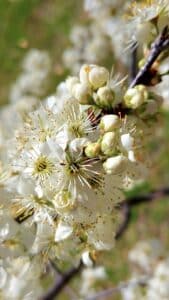
One of the most important early-season trees for bees, blooming in late winter to early spring when very little else is available. It supports native bees like mining bees (Andrena), mason bees (Osmia), sweat bees (Lasioglossum, Halictus), small carpenter bees (Ceratina), and honeybees. Typically 15–25 feet tall and 15–20 feet wide, it is a true small tree rather than a shrub. Deciduous and tough, it plays a critical role in feeding pollinators as they emerge from dormancy.
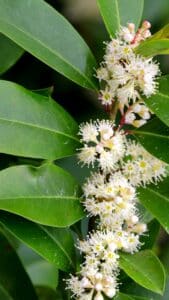
An evergreen native that provides both structure and early-season nectar for pollinators. Its spring blooms attract Andrena, Osmia, Ceratina, sweat bees, and honeybees, extending the value of the Prunus group well beyond Mexican Plum. Typically 15–30 feet tall and 10–20 feet wide, it can be grown as a dense shrub or pruned into a small tree, with compact cultivars like ‘Bright and Tight’ offering a more refined form. Evergreen foliage provides year-round screening, habitat, and beauty.
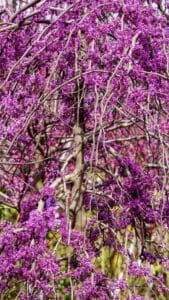
Early spring blooms provide accessible nectar and pollen for a wide range of native bees, including Habropoda laboriosa, mason bees (Osmia), bumble bees (Bombus), sweat bees, and honeybees. Typically 15–25 feet tall and wide, it naturally forms a small multi-trunk tree but can be pruned for structure. Deciduous and highly adapted to North Texas, it is one of the most reliable early pollinator trees you can plant. Its vibrant spring flowers make it just as valuable ornamentally as it is ecologically.
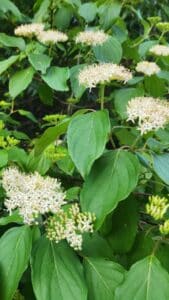
Flat clusters of creamy white flowers in spring to early summer make this highly accessible to smaller native bees such as Andrena, Lasioglossum, Halictus, Ceratina, and honeybees. Typically 10–20 feet tall and wide, it can be grown as a large shrub or trained into a small tree. Deciduous and adaptable, it also produces berries that support songbirds and other wildlife later in the season. Few native plants provide as much value to pollinators, birds, and the overall ecosystem.
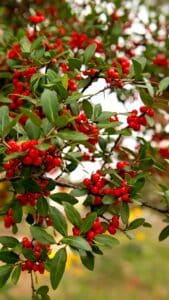
Small but nectar-rich spring blooms support plasterer bees (Colletes), sweat bees, small carpenter bees, and honeybees. Typically 15–25 feet tall and 10–20 feet wide, it can be maintained as a large shrub or small tree, with compact cultivars like ‘Skyward’ and ‘Skyline’ fitting smaller landscapes. Evergreen and extremely tough, it provides year-round structure, screening, and habitat. Female plants also produce berries that are highly valued by birds.
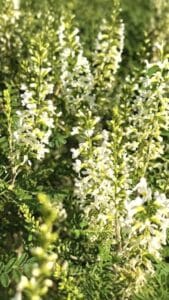
One of the best summer-blooming native plants for bees, which is especially important during the hottest months when nectar sources become scarce. Its fragrant white flowers attract sweat bees, leafcutter bees (Megachile), small carpenter bees, and honeybees in impressive numbers. Typically 8–15 feet tall and wide, it can remain a large shrub or be trained into a small tree with pruning. Deciduous, drought tolerant, and remarkably resilient, it shines when many other plants have stopped blooming.
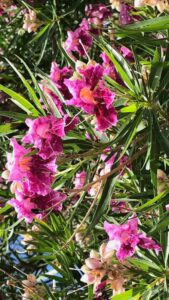
A long-blooming summer tree that supports carpenter bees (Xylocopa), bumble bees (Bombus), leafcutter bees, and honeybees. Typically 10–25 feet tall and wide, it can be kept smaller with pruning or allowed to develop into an airy specimen tree. Deciduous and exceptionally heat tolerant, it continues producing flowers through much of the summer when pollinators need them most. Its showy blooms also make it one of the most beautiful native flowering trees for Texas landscapes.
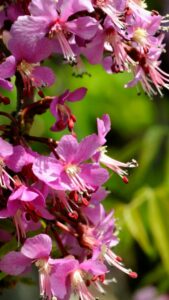
Blooming in early to mid-spring, Mexican Buckeye provides nectar and pollen for mining bees (Andrena), sweat bees, small native bees, and honeybees. Typically 10–20 feet tall and wide, it can be grown as a large shrub or trained into a small multi-trunk tree. Deciduous and highly adaptable, it helps bridge the gap between winter dormancy and peak spring bloom. Its pink flowers and attractive seed pods make it a standout ornamental as well.
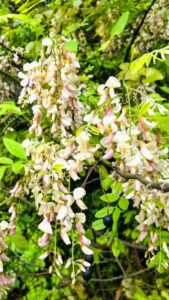
Spring blooms provide nectar and pollen for a range of native bees including sweat bees, leafcutter bees, mason bees, and honeybees. Typically 15–30 feet tall and 15–25 feet wide, it grows as a small tree but can also be developed from a multi-trunk form. Deciduous and well adapted to North Texas soils, it offers excellent wildlife value while remaining easy to grow. Its distinctive seed pods and graceful white flower clusters give it year-round interest and character.


Pick-up Locations (selected when checking out):
Arlington – 1100 SW Green Oaks Blvd., Arlington, TX 76017
Bedford – 2424 Forest Ridge Dr., Bedford, TX 76021
College Station – 13600 Rock Prairie Road, College Station, TX 77845
Fort Worth – 800 E Northside Drive, Fort Worth, TX 76102
Mansfield – 620 S Wisteria St, Mansfield, TX 76063
Pilot Point – 12804 Pelzel Rd, Pilot Point, TX 76258
Southlake – 1950 E. Continental Blvd., Southlake TX 76092

Fall Garden Pickup Date:
Saturday, September 26
9 AM – 11 AM
Instructions:
Stay in your vehicle—we’ll load your garden box for you.
Plants MUST be picked up at the pre-chosen date, time and location.
No rainchecks. No refunds. Unclaimed plants will be donated to a local community garden.
ADDRESS:
12804 Pelzel Rd Pilot Point TX 76258
*Located off FM 455, about halfway between Celina and Pilot Point
CALL: 972.954.8580
TEXT: 972.954.8574
HOURS:
Tuesday – Saturday 9 AM – 5 PM
Sunday 10 AM – 5 PM