If you’ve ever stopped to watch a hummingbird work a patch of flowers, you know it’s hard to look away. One minute it’s hovering in midair, the next it’s gone—only to zip back a few seconds later to visit another bloom. Despite weighing only a few grams, hummingbirds are among the most energetic animals on Earth, beating their wings dozens of times every second and burning through calories at a rate that almost doesn’t seem reasonable.
Here in North Texas, the two hummingbird species gardeners are most likely to encounter are the Ruby-throated Hummingbird (Archilochus colubris) and the Black-chinned Hummingbird (Archilochus alexandri). Ruby-throated Hummingbirds are the species most people notice during spring and fall migration, while Black-chinned Hummingbirds commonly nest across much of North Texas during the summer. A landscape filled with nectar-rich native plants can provide an important refueling stop for migrants and a dependable food source for birds raising young.
Everything about a hummingbird is built for feeding from flowers. Their long, slender bills reach deep into tubular blooms that many other birds can’t access, and their specialized tongues flick in and out at high speed to gather nectar. They are not sipping through a straw; they are using a flexible, forked tongue that traps nectar and pulls it back into the mouth with remarkable efficiency.
That’s one reason hummingbirds are drawn to long, tubular flowers. Red, orange, and bright pink blooms often catch their attention first, but color is only part of the equation. Flower shape, nectar production, and bloom timing matter just as much. Many Texas native plants evolved alongside hummingbirds and other pollinators, producing flowers that are almost purpose-built for them.
Although we usually associate hummingbirds with flowers or feeders, nectar is only part of their diet. They also consume hundreds of tiny insects and spiders every day, especially mosquitoes, gnats, aphids, and small flies. Those insects provide the protein, fats, minerals, and other nutrients that nectar cannot—especially during nesting season, when females are raising chicks.
Healthy hummingbird habitat starts with healthy insect habitat. Native plants support native insects, which in turn support hummingbirds, songbirds, butterflies, and countless other forms of wildlife. Every native planting helps rebuild a small piece of the ecological web that once covered much of North Texas.
One of the biggest challenges for hummingbirds isn’t spring—it’s late summer. By August and September, many landscapes have stopped blooming just as southbound migration begins and local birds are still working hard to fuel themselves. That is when tough native bloomers become more than pretty plants; they become part of the food supply.
They’re also some of the toughest plants you can grow. Most are well adapted to North Texas clay soils, summer heat, periods of drought, and the weather extremes that make gardening here such a challenge. Once established, many thrive with surprisingly little supplemental irrigation.
The nine plants below are some of our favorite native hummingbird plants at Rooted In. Together, they create a season-long sequence of nectar: early spring flowers, summer workhorses, and late-season bloomers that keep going when hummingbirds need them most. The result is a landscape that is beautiful, resilient, and genuinely useful to the tiny birds that make a garden feel alive.
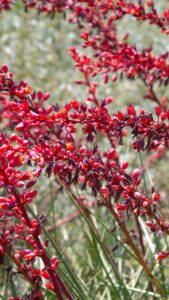
If you want one plant that hummingbirds will visit all summer long, Red Hesperaloe is hard to beat. Tall flower stalks loaded with coral-red tubular blooms rise well above the foliage, creating an easy target for hummingbirds while adding dramatic vertical interest to the landscape.
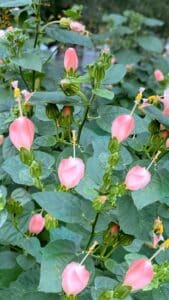
Few Texas natives are as dependable for hummingbirds as Turk’s Cap. Its bright red, partially closed flowers bloom for months, providing a steady nectar source during summer and into fall while thriving in places many flowering plants struggle, including part shade and woodland gardens.
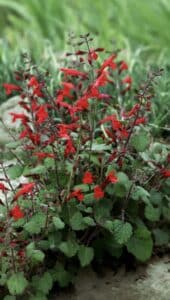
Cedar Sage is one of the first native salvias to bloom each spring, making it especially valuable as hummingbirds return to North Texas. Its brilliant red flowers seem to glow beneath trees, bringing color to woodland gardens while feeding migrating and breeding birds.
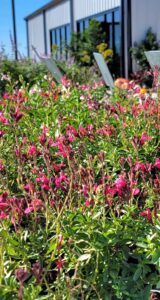
One of the finest landscape perennials for North Texas, Autumn Sage blooms repeatedly from spring until frost with very little care. Its tubular flowers are perfectly sized for hummingbirds, and once they find it, they’ll often return several times each day.
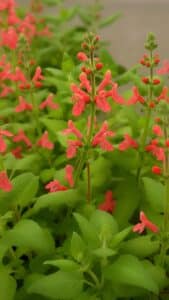
Texas Betony may not be as well known as some of the salvias, but hummingbirds certainly know where to find it. Its bright scarlet flowers provide nectar from spring into fall, making it a wonderful addition to woodland gardens and partially shaded landscapes.
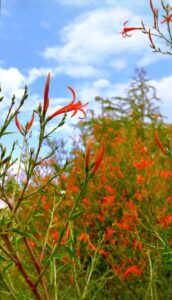
When summer temperatures climb into the triple digits, Flame Acanthus is just getting started. Its brilliant orange-red tubular flowers become one of the most dependable nectar sources of late summer, precisely when many migrating hummingbirds begin moving through Texas.
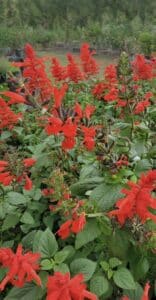
Despite its common name, Tropical Sage is native to Texas and one of the longest-blooming salvias you can grow. Its red flowers continue producing nectar through much of the growing season, making it an excellent bridge between spring and fall bloomers.
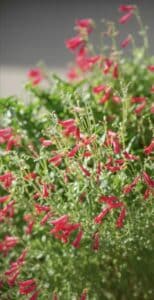
Rock Penstemon’s narrow, tubular flowers were practically designed with hummingbirds in mind. Blooming in spring, it provides valuable nectar just as hummingbirds are establishing territories and beginning to nest across Texas.
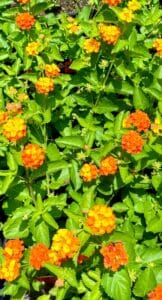
Texas Lantana finishes the list because it’s one of the toughest flowering perennials you can grow. While butterflies may get most of the attention around lantana, hummingbirds readily visit its nectar-rich flowers throughout the hottest months of summer.


Pick-up Locations (selected when checking out):
Arlington – 1100 SW Green Oaks Blvd., Arlington, TX 76017
Bedford – 2424 Forest Ridge Dr., Bedford, TX 76021
College Station – 13600 Rock Prairie Road, College Station, TX 77845
Fort Worth – 800 E Northside Drive, Fort Worth, TX 76102
Mansfield – 620 S Wisteria St, Mansfield, TX 76063
Pilot Point – 12804 Pelzel Rd, Pilot Point, TX 76258
Southlake – 1950 E. Continental Blvd., Southlake TX 76092

Fall Garden Pickup Date:
Saturday, September 26
9 AM – 11 AM
Instructions:
Stay in your vehicle—we’ll load your garden box for you.
Plants MUST be picked up at the pre-chosen date, time and location.
No rainchecks. No refunds. Unclaimed plants will be donated to a local community garden.
ADDRESS:
12804 Pelzel Rd Pilot Point TX 76258
*Located off FM 455, about halfway between Celina and Pilot Point
CALL: 972.954.8580
TEXT: 972.954.8574
HOURS:
Tuesday – Saturday 9 AM – 5 PM
Sunday 10 AM – 5 PM