If there is one crop that quietly separates frustrated gardeners from confident ones in North Texas, it’s onions. Not tomatoes. Not peppers. Onions.
That surprises people. Onions don’t vine, don’t sprawl, don’t attract dramatic caterpillars, and don’t demand daily attention. Yet year after year, they’re the crop most likely to be misunderstood, planted wrong, or written off as “finicky.” In reality, onions are one of the most forgiving, reliable, and rewarding vegetables you can grow here—if you understand one simple thing:
👉 Day length matters more than almost anything else.
Get that right, choose the right varieties, and onions become almost boringly dependable. Which, in gardening terms, is high praise.
This guide is written for beginners—real beginners. The ones who want clear answers, not folklore. We’ll focus on short-day onions that are proven performers in North Texas and walk through planting, care, harvest, and storage in plain language.
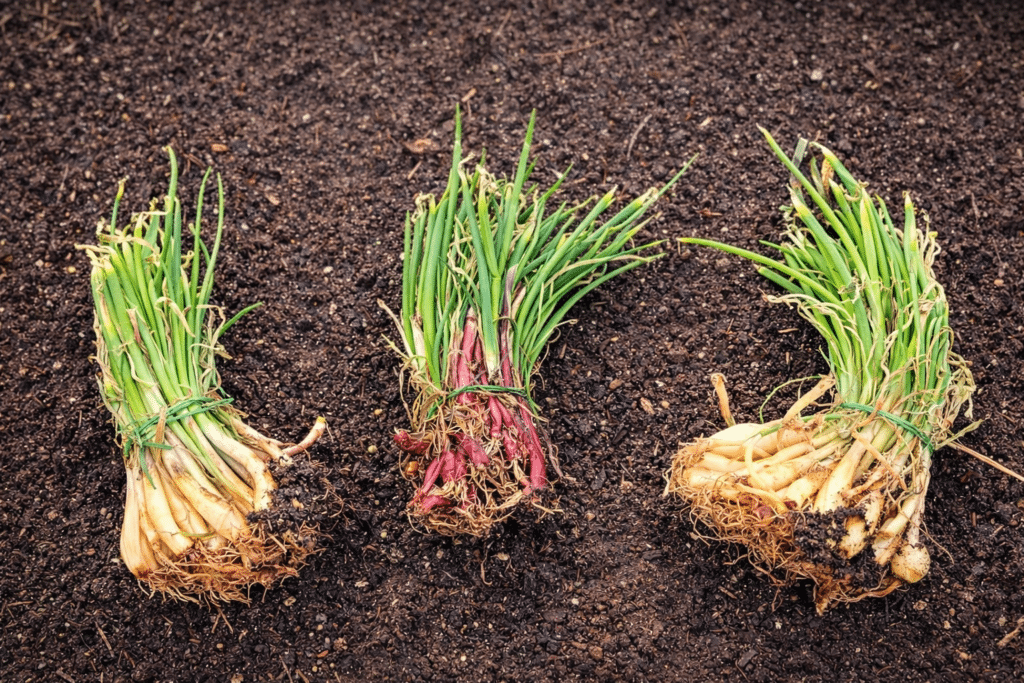
Onions form bulbs in response to day length, not temperature.
That’s the part most folks miss.
North Texas sits firmly in short-day onion country.In fact, when gardeners plant long-day onions here, the plants often look healthy… but they never quite bulb properly. You end up with thick green tops and pencil-sized onions, and the plant takes the blame instead of the daylight math.
Short-day onions, planted at the right time, line up perfectly with our winter-to-spring day length. They grow foliage through winter, then naturally shift energy into bulb formation as days lengthen in spring.
Onions can be grown from seed, transplants, or sets. For beginners, sets are the sweet spot.
Onion sets are small, immature bulbs grown the previous season. They give you a head start and remove the most fragile stage of onion growth.
Benefits of sets:
For most of North Texas:
Late January through February is prime onion-planting season.
Onions need time to grow leaves before spring day length triggers bulbing. Leaves are solar panels. More panels mean bigger bulbs.
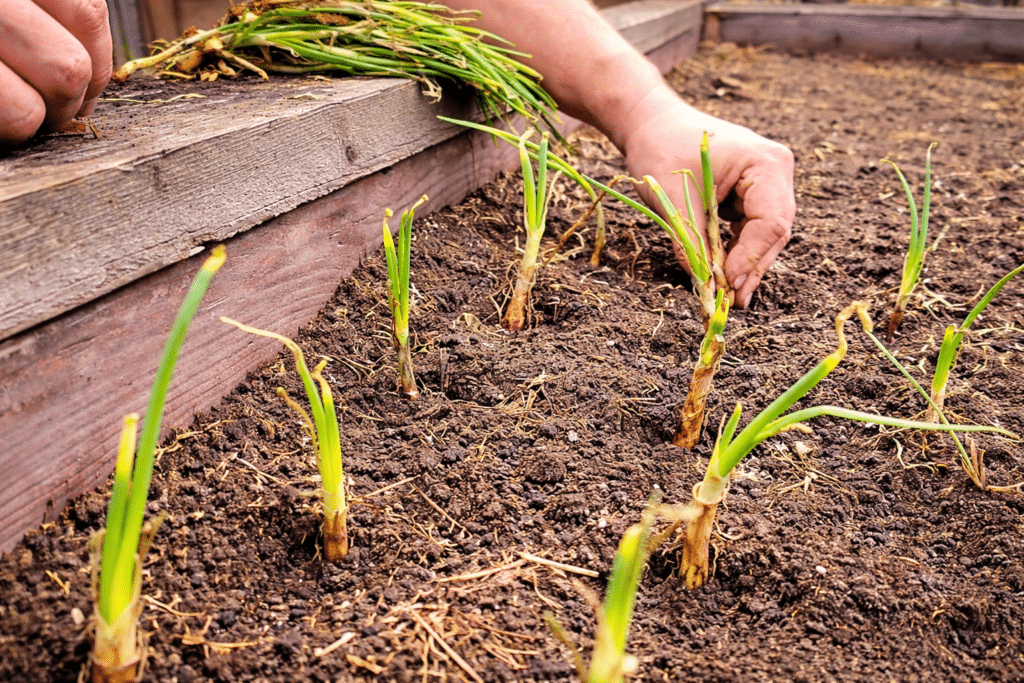
Onions reward good-enough soil, not perfect soil.
Here’s all you really need:
That’s the non-negotiable.
A couple inches of finished compost mixed into native soil improves drainage, feeds microbes, and buffers our infamous clay without turning the bed into a sponge. No sand. No elaborate blends. Just compost and restraint.
Onions don’t need gourmet meals. They need steady nutrition early and restraint later.
For North Texas soils, granular Microlife 6‑2‑4 (or comperable slow reease fertilizer) is the best all-around choice. It provides slow, balanced nutrients, supports soil biology, and avoids nitrogen spikes that lead to leafy plants and undersized bulbs.
Feed the leaves early. Let the bulbs finish the job. No need to onion-on extra fertilizer.
Label varieties if you plant more than one. Memory fades faster than onions grow.
Onions like consistent moisture—not soggy soil.
Water deeply, allow the surface to dry slightly, and avoid daily shallow watering. Mulch lightly to suppress weeds and conserve moisture.
Weeds are the bigger threat. Onions don’t compete well early, so stay ahead while weeds are small. Miss that window and you’ll be crying—for reasons unrelated to sulfur compounds.
Best for fresh eating and slicing
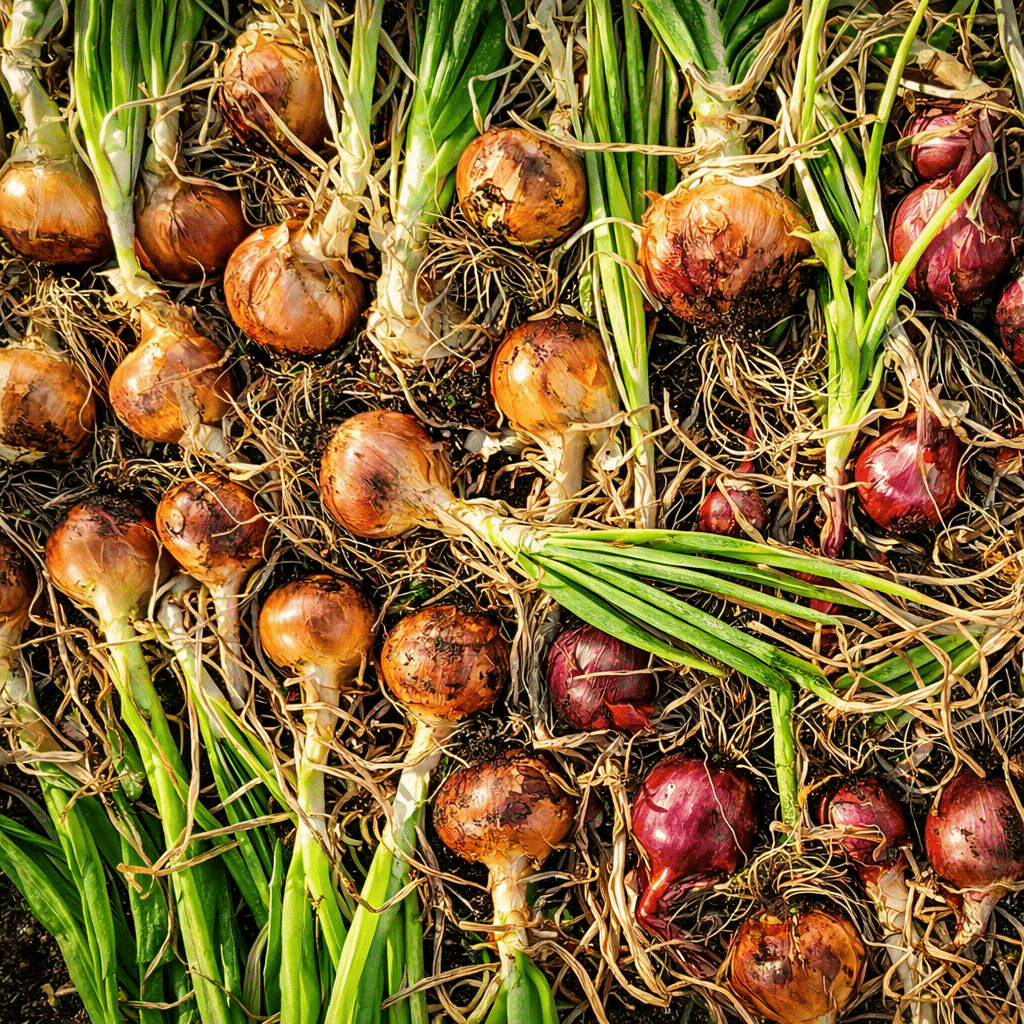
The 1015 Texas Super Sweet is a Texas classic for a reason.
Bred specifically for our climate, this onion is naturally low in sulfur compounds, which is why it’s noticeably sweet and rarely brings tears to the cutting board. The texture is juicy and tender, making it especially good when eaten raw or lightly cooked.
In the kitchen, this is the onion for:
Burgers and sandwiches
Onion rings
Fresh salsas and pico de gallo
Salads and quick sautés
In the garden, 1015s grow reliably and size up well when given steady moisture and early nutrition. The tradeoff is storage. Thin skins and high moisture content mean this onion is best enjoyed soon after harvest.
Think of the 1015 as a seasonal treat—meant to be used generously while it’s fresh, not saved for later.
Best for beginners and early harvests
Texas Early White is the steady, no-nonsense onion that earns trust quickly.
This variety matures earlier than most short-day onions, which makes it especially valuable in North Texas, where spring weather can turn hot fast. It grows evenly, bulks up reliably, and finishes before heat stress becomes a problem.
Flavor-wise, Texas Early White is mild and clean, without the sharp bite some white onions have. It works well in:
Tacos and Tex-Mex dishes
Everyday cooking
Light sautés, soups, and casseroles
In the garden, this is one of the most forgiving onions you can grow. It tolerates minor missteps, performs well in a range of conditions, and delivers consistent results year after year.
If you’re new to growing onions—or just want something dependable—this is a very good place to start.
Best for cooking and storage
Red Creole is a workhorse.
This variety was developed for hot, humid climates, and it shows. It handles North Texas conditions with ease and is one of the best-storing short-day onions you can grow here.
Flavor-wise, Red Creole is bolder and more savory than the others. It holds up to heat and time, which makes it ideal for roasting, soups, stews, and long-cooked sauces.
It also shines in distinctly Texas ways: thinly sliced on a Texas-style burger, pickled alongside barbecue, or diced raw and sprinkled over a bowl of Texas red, where its bite cuts cleanly through the richness.
Its thicker skins and denser bulbs allow it to cure well and store longer—often well into summer. If you want an onion that’s still around when everything else is gone, this is the one.
Every onion we stock is selected for North Texas climate and soils. Short-day, heat-tolerant, reliable—no experiments, no long shots.
That philosophy applies to everything we sell. Plants shouldn’t need heroics to succeed. They should be set up to win.
When tops yellow and fall naturally, it’s time to harvest. Lift bulbs gently and cure them in a warm, shaded, well‑ventilated area.
Once cured, trim roots and tops and store in a cool, dry place with airflow. Red Creole stores especially well; sweeter onions are best enjoyed sooner.
If vegetables have frustrated you before, onions are a good place to rebuild confidence. Give them sun, compost, and the right fertilizer, and they’ll meet you more than halfway.
Sometimes the simplest crops are the ones that make gardeners stick around.
Short-day onion sets are available in-store for $3.50 per bunch. We stock only cultivars proven to perform in North Texas—because starting with the right plant matters.


ADDRESS:
12804 Pelzel Rd Pilot Point TX 76258
*Located off FM 455, about halfway between Celina and Pilot Point
CALL: 972.954.8580
TEXT: 972.954.8574

HOURS:
Tuesday – Saturday 9 AM – 5 PM
Sunday 10 AM – 5 PM