Let’s have an honest conversation about irrigation. Irrigation is not your lawn’s primary water source. It is not the hero. It is not the headliner. It is the backup singer.
Rainfall is the star of the show.
Irrigation simply supplements the lack of rainfall.
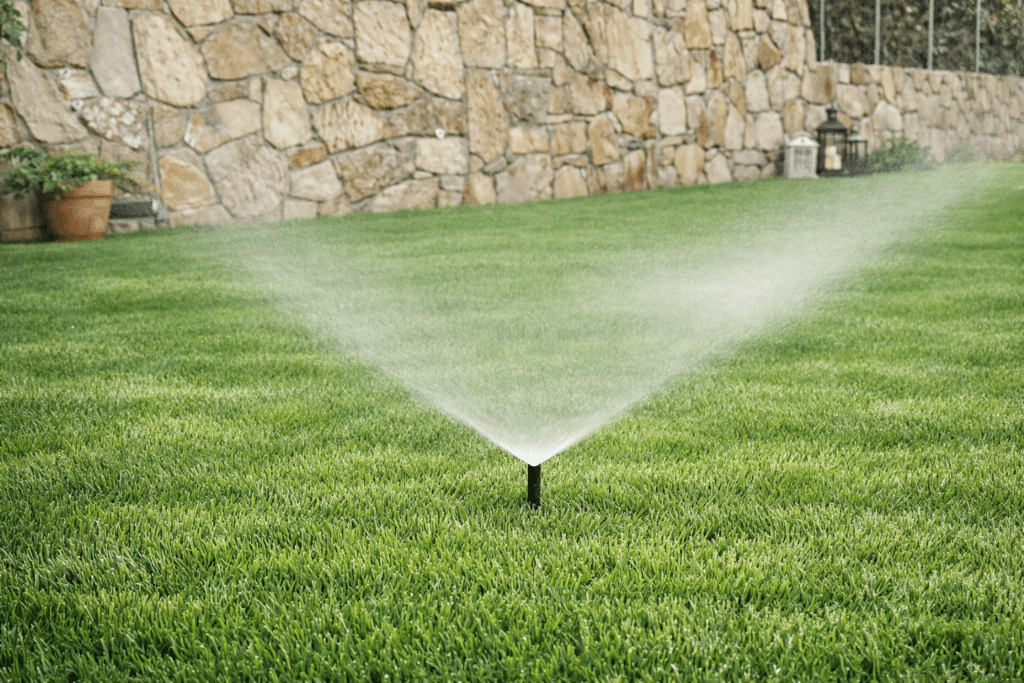
Somewhere along the way, we decided our landscapes needed to drink like marathon runners every other day. Automatic sprinkler systems click on like clockwork. Hose-end sprinklers get dragged around the yard. And sometimes… it is just you at the end of a water hose playing firefighter. All of that, is irrigation. But more water does not equal better plants.
The problem comes when irrigation becomes your primary water source instead of a supplement to rainfall. Plants evolved with rain patterns not programmable timers. Irrigation Is a tool, not a Lifestyle
The Soil Is Smarter Than You Think. Just because it is hot, windy, or we have not seen rain in a while especially in winter does not automatically mean you need to water. The surface dries quickly, the top inch of soil can feel bone dry, but below that? There may be perfectly adequate moisture. This is where understanding soil moisture changes everything.
Give Yourself “Eyes” in the Soil. A simple soil moisture meter is one of the most underrated tools in landscaping. It gives you visibility below the surface. Instead of guessing, you are measuring. Think of it as reading the room except the room is underground. If moisture is present at root depth, you wait. And yes, waiting is uncomfortable when temperatures rise, and plants begin to wake up in spring. You will feel the urge to flip on that irrigation system. Wait as long as possible. Check soil moisture first.
Water Less Often. Water Deeper. Here is where the magic happens. The less frequently you water, and the deeper you water when you do, the deeper and more extensive your plant roots will grow. Roots chase moisture. As the surface dries, roots follow the water downward.
Shallow, frequent watering = shallow roots.
Deep, infrequent watering = deep roots.
And deep roots mean, greater drought tolerance, better cold hardiness, Stronger turf, Healthier perennials, more resilient landscapes overall. You can literally train your landscape to grow deeper roots. Now is the time to start.
Spring Is the Temptation Season. As temperatures warm and plants begin actively growing, it is natural to feel that pull. “It’s warm. It is windy. It has not rained. I should water.” Maybe. Maybe not. Check soil moisture first. Plants don’t need wet soil they need access to moisture at root depth. The surface will dry. That is normal. That does not mean your lawn is gasping for water.
Stack the Odds in Your Favor. Want to use less irrigation and still have a beautiful landscape? Pair smart watering with smart practices.
Choose regionally appropriate native and adaptive plants
Mulch your beds to reduce evaporation
Mulch your grass clippings back into the lawn
The right plant material for your region changes everything.
And to the high water use plants we have pampered for decades, cheers. You had a good run. But the spotlight is shifting.
Resource-efficient natives and adaptive plants are taking center stage.
Irrigation should be your safety net not your crutch.
Let rainfall do what it was designed to do.
Use irrigation when it is truly needed.
And trust your soil to tell you the truth.
Cheers to deeper roots, healthier landscapes, and water bills that do not make you sweat!


ADDRESS:
12804 Pelzel Rd Pilot Point TX 76258
*Located off FM 455, about halfway between Celina and Pilot Point
CALL: 972.954.8580
TEXT: 972.954.8574

HOURS:
Tuesday – Saturday 9 AM – 5 PM
Sunday 10 AM – 5 PM